

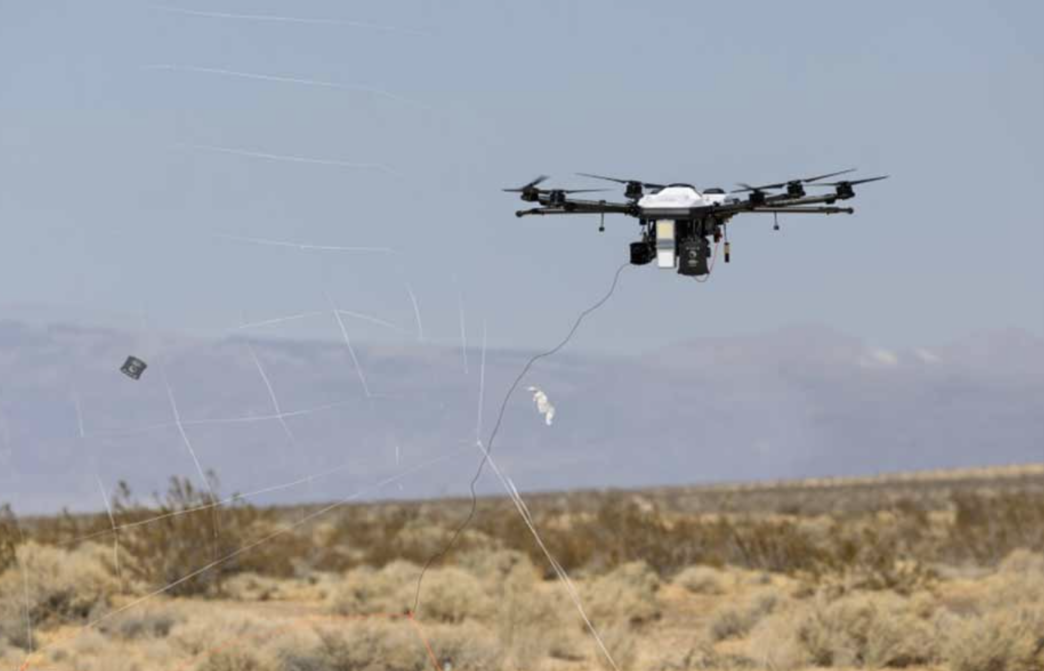
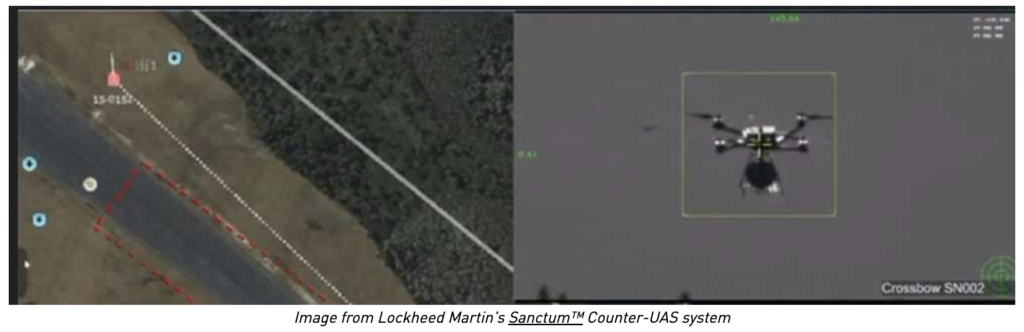
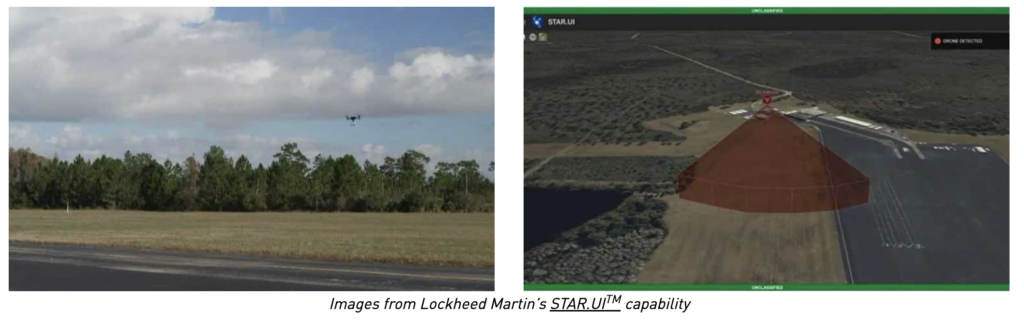
Lockheed Martin’s new NetSense announcement matters not because drone detection is new, but because of what it says about the future role of wireless infrastructure. In a feature published on March 19, the company said it had demonstrated a prototype that uses commercial 5G networks and off-the-shelf phones as detection receivers to identify aerial intrusions in real time.
Why it matters:
This is another sign that wireless networks are being repositioned from pure connectivity infrastructure toward something more strategic: a platform that can also support sensing, situational awareness, and security-related functions. That matters for defense, public safety, critical infrastructure, and, eventually, commercial deployments where awareness of low-altitude airspace becomes increasingly important.
The bigger picture:
The Lockheed announcement lands at a moment when the industry is giving more substance to the long-discussed idea of Integrated Sensing and Communication (ISAC). In late February 2026, Ericsson announced a live proof of concept in Texas using massive-MIMO radios to detect and track drones, explicitly framing it as part of the evolution toward networks that both connect and sense.
That is important because it moves the conversation beyond theory. For years, sensing has sat largely in the world of 6G research and conference slides. What is changing now is that major players are beginning to show how sensing-related capabilities could emerge from deployed or deployable wireless assets, not only from bespoke defense systems.
Between the lines:
What stands out in Lockheed Martin’s framing is the attempt to reduce dependency on specialized new infrastructure. The company presents NetSense as a way to turn existing commercial networks into an added safety layer, which, if scalable, could materially change cost structures, deployment timelines, and adoption pathways for certain drone-detection use cases.
This also reinforces a broader thesis that the value of 5G Advanced and early 6G may not come only from faster links or lower latency. It may increasingly come from the ability to make networks more programmable, more context-aware, and more useful in domains that sit beyond traditional telecom. That includes defense-adjacent and mission-critical environments. This last point is an inference based on the direction of recent industry announcements.
Another recent example:
Ericsson is not the only adjacent signal here. Orange Business launched Orange Drone Guardian on March 17, 2026, positioning it as Europe’s first anti-drone “as-a-service” offer. Orange said the solution is designed to evolve over time to integrate additional sensors and new 5G radio-sensing technologies. That is notable because it shows the market is not just experimenting technically, but also beginning to build service models around telecom-enabled airspace awareness.
What to watch:
The key question now is whether these efforts remain isolated proofs of concept and service-layer offerings, or whether they begin to form a clearer category around sensing-enabled networks in 5G Advanced and early 6G. If more vendors, operators, and defense-facing integrators show credible performance using existing network assets, this could become one of the more concrete bridges between advanced wireless and mission-focused real-world deployment.