

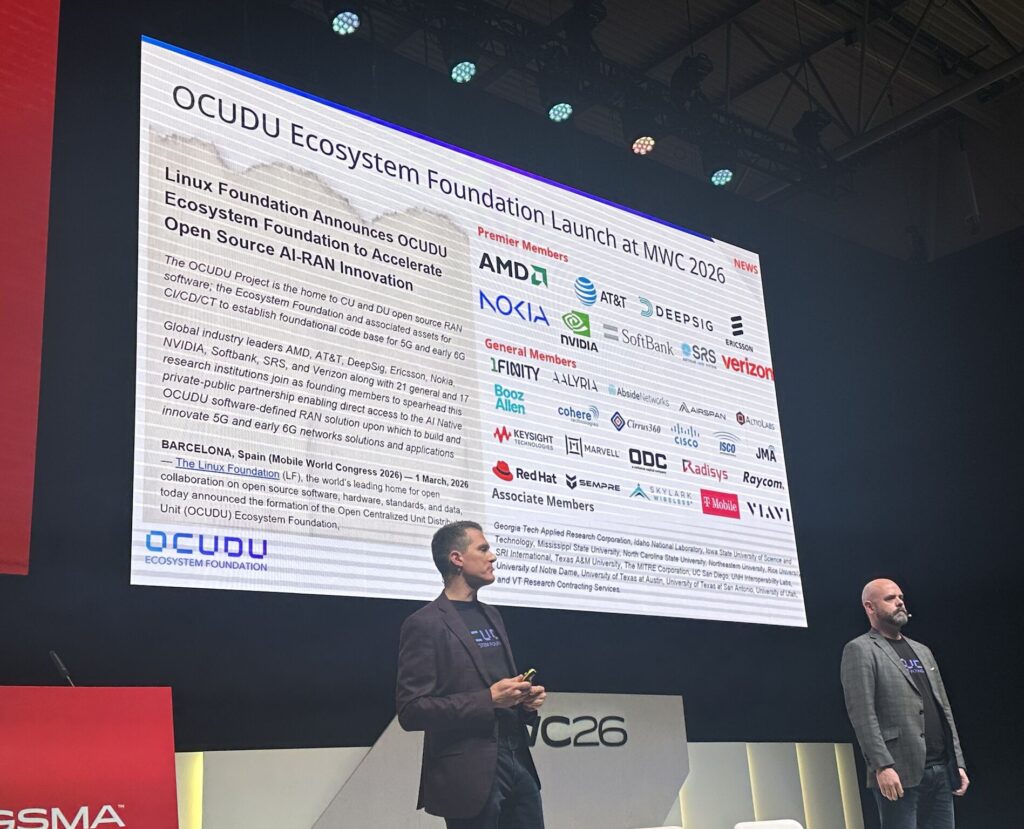
The Linux Foundation used MWC 2026 to announce the OCUDU Ecosystem Foundation, a new industry vehicle meant to build, scale and sustain the software assets around the OCUDU Project, which it describes as the home for open-source CU and DU RAN software and associated CI/CD and continuous testing assets for 5G and early 6G.
Why it matters: Open RAN has long promised more openness and interoperability, but the industry has struggled to move from fragmented pilots to a broadly trusted, production-ready software base. Linux Foundation is clearly trying to position OCUDU as that missing layer: a shared reference foundation for CU/DU software, testing, integration and deployment blueprints that multiple vendors and operators can build on. That final sentence is an inference based on how the foundation and its objectives are described in the announcement.
The technical angle: This is not being framed as just another consortium. The Linux Foundation says the foundation is meant to support a foundational code base for 5G and early 6G, house the OCUDU project and related open-source efforts over time, and foster end-to-end solutions through documentation, testing, integration and so-called “super blueprints.” It also explicitly links the effort to AI-based algorithms and solutions, as well as deeper work in RAN intelligence, automation and edge orchestration.
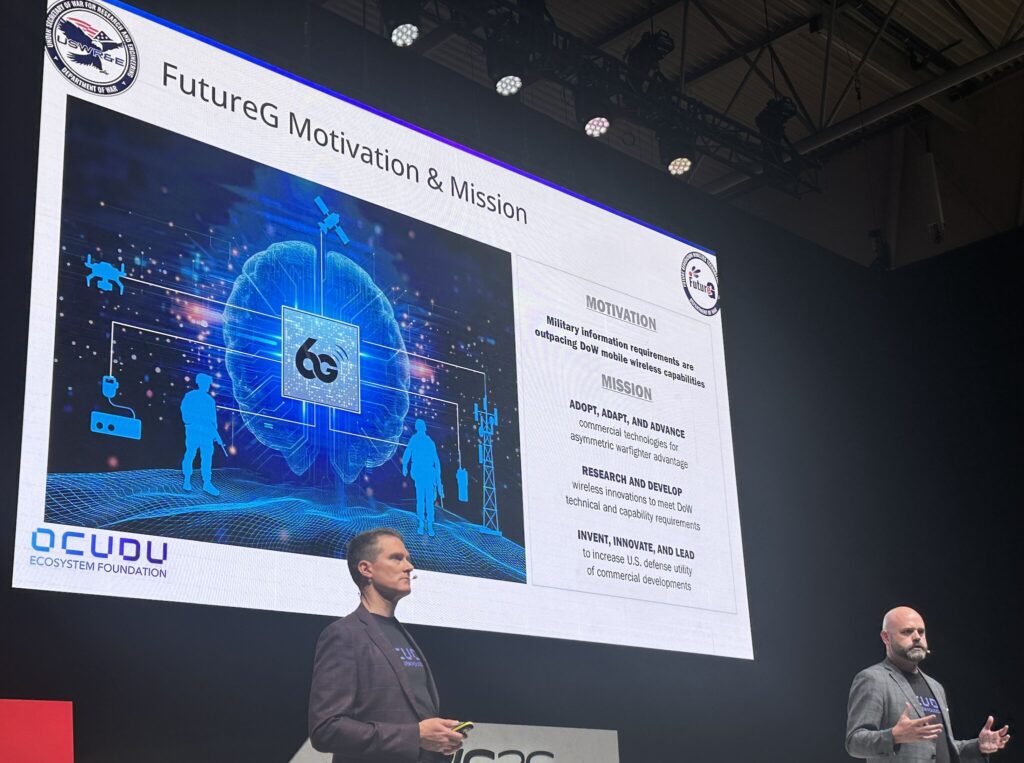
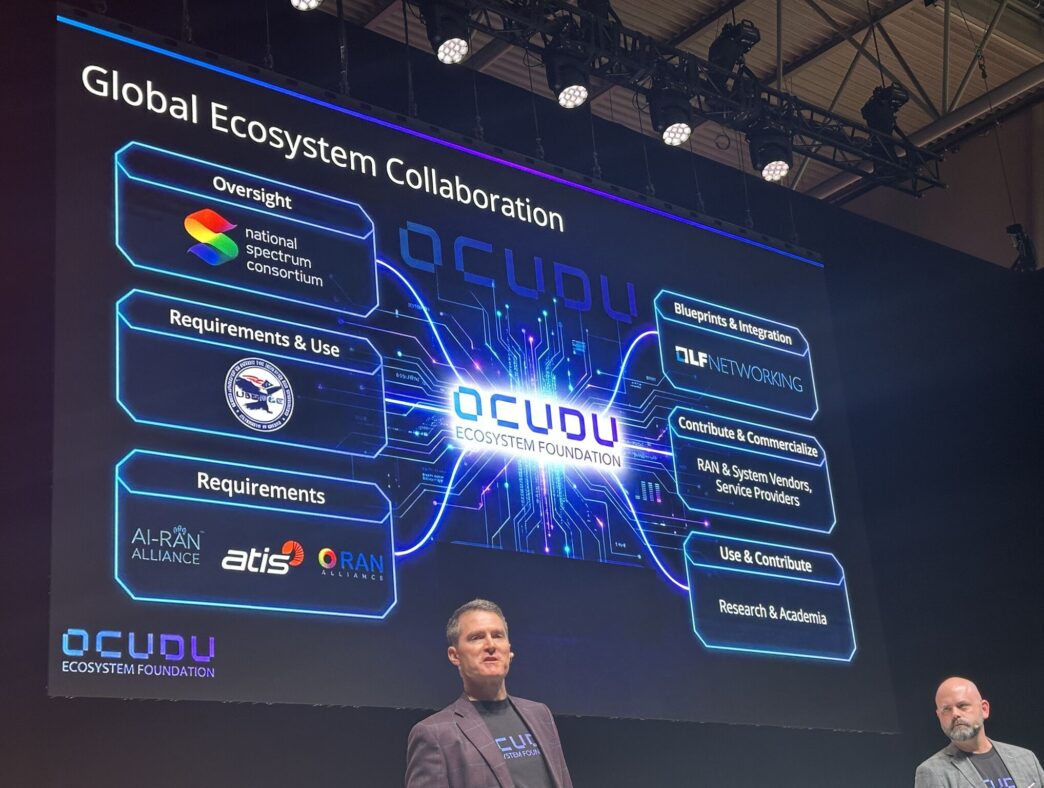
The backstory: OCUDU did not emerge from nowhere. The Linux Foundation says the project began with investment from the National Spectrum Consortium and the FutureG Office, which funded DeepSig and Software Radio Systems to build the initial software. That gives the initiative a more strategic flavor than a typical vendor-led open-source launch.
Between the lines: The founding structure is what makes this important. Premier members include not only operators and infrastructure giants, but also silicon, AI and open RAN players. The general member list includes companies such as Aalyria, Airspan, Booz Allen, Cisco, JMA Wireless, Keysight, Marvell, ODC, Radisys, Red Hat, T-Mobile and Viavi, while participating research institutions include MITRE, Georgia Tech Applied Research Corporation, Northeastern, Rice, UC San Diego, UT Austin and others. That mix suggests OCUDU is being positioned as more than a telecom code project. It looks like an attempt to create a shared software layer that could matter across commercial, research and government wireless ecosystems. The final sentence is an inference from the member mix and participation model.
The bigger picture: The Linux Foundation says OCUDU is meant to complement standards work from 3GPP and the O-RAN Alliance, while helping accelerate innovation through neutral governance and open collaboration. In practice, that means the industry may now be shifting from debating whether AI belongs in the RAN to competing over who shapes the common software base underneath AI-native wireless networks. That final point is an inference based on the announcement’s framing.
What to watch: OCUDU’s credibility will depend on whether it can become a real integration and deployment base rather than just another logo-heavy initiative. The Linux Foundation is explicitly promising reference architectures, conformance tooling and production-oriented blueprints to help scale Open RAN from pilots to broader deployment. If that materializes, OCUDU could become one of the more important open software foundations in the early AI-RAN and 6G stack. The last sentence is an inference grounded in the launch announcement.