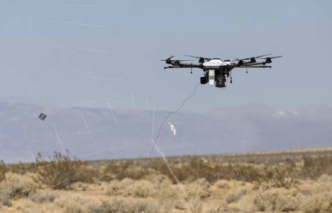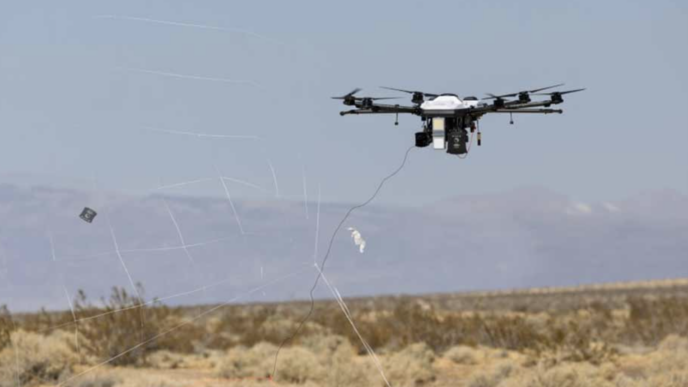


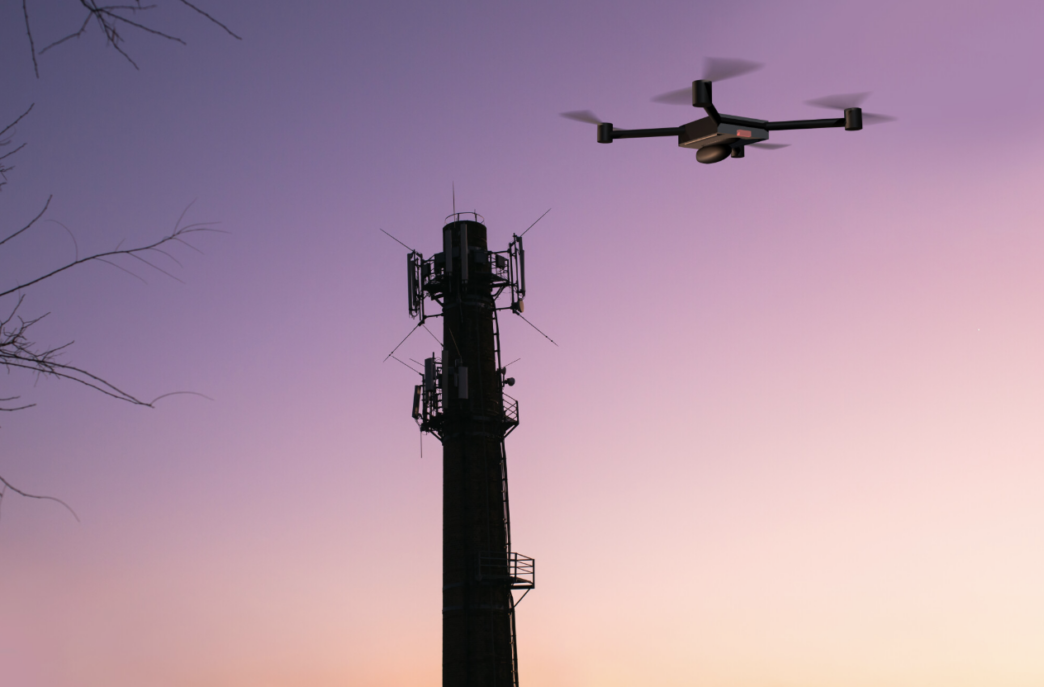
Orange Business has launched Orange Drone Guardian, describing it as Europe’s first anti-drone “as-a-service” solution. In its March 17 announcement, the company positions the offer as a scalable counter-UAS platform designed to detect, identify, and classify intrusive drones in low-altitude airspace across France, with the option to extend coverage to other European countries. The targeted users include critical infrastructure operators, public institutions, and major event organizers.
Why it matters:
This is not just another drone-security announcement. What stands out is the service model. Orange is packaging counter-drone capability as an operational, managed offer rather than as a one-time hardware deployment. That lowers the barrier to adoption and moves the conversation from buying isolated systems toward consuming persistent airspace awareness as a service.
The bigger picture:
Orange Drone Guardian is built on a stack that includes managed connectivity, sovereign infrastructure operated by Orange, a secure operations center in France, detection technologies, and command-and-control software. Orange also says the platform is designed to evolve over time through the integration of additional sensors and new 5G radio-sensing technologies, while AI and digital twins are expected to strengthen modeling and data analysis. That makes this more than a narrow security product. It is an early signal that telecom assets may increasingly be repurposed into sensing and protection infrastructure.
Between the lines:
The real move here is not simply Orange entering the anti-drone space. It is Orange trying to use assets it already controls, including connectivity, cloud, operations, and physical infrastructure, to create a more scalable model for drone detection. The company explicitly points to the role of TOTEM-operated sites as advantageous positions for surveillance equipment, which suggests that tower and rooftop footprints may become part of a broader sensing layer, not just a connectivity layer.
That is a meaningful shift. For years, telecom operators have talked about moving beyond connectivity. What Orange is showing here is a more concrete version of that idea: using operator-owned infrastructure to deliver mission-oriented services in security-sensitive environments. That broader interpretation is an inference, but it is strongly supported by how Orange frames the launch.
Another relevant example:
A useful earlier reference point is Ericsson’s ISAC proof of concept announced on February 26, 2026, in which the company demonstrated drone detection using massive-MIMO radios at its U.S. headquarters in Texas. Ericsson framed that work as part of the evolution toward networks that can both connect and sense. Orange’s move is different in one important respect: Ericsson’s announcement emphasized a sensing demonstration, while Orange is packaging a managed commercial service around sovereign infrastructure, operations, and a roadmap toward 5G sensing. Together, they suggest that the market is beginning to develop along two tracks at once: sensing as a network capability, and sensing as a service model.
What to watch:
The key question now is whether other operators follow with similar managed airspace-awareness offers, especially where secure cloud, site infrastructure, and private or public 5G assets can be combined into a single proposition. If they do, counter-drone services could become one of the clearest early examples of telecom infrastructure expanding into sensing, security, and operational intelligence.