

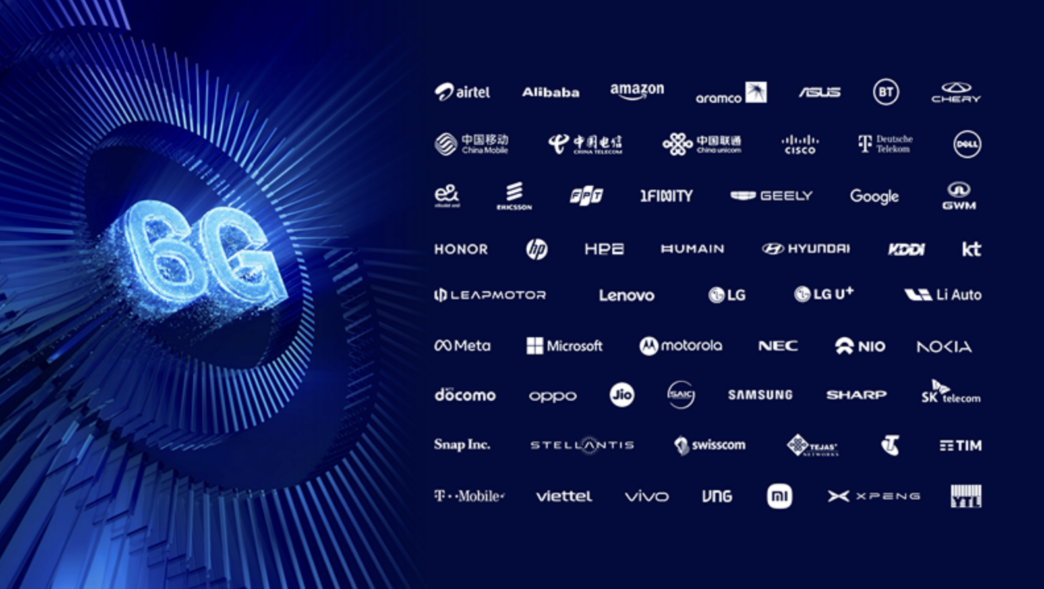
Why it matters:
The 6G industry has no shortage of future-looking statements. What makes this move more notable is the attempt to align a wide ecosystem around a common trajectory, and not just a vague narrative. The accompanying partner quotes suggest that major players are increasingly converging on a broader definition of 6G as infrastructure for AI-native services, not just another wireless upgrade.
The bigger picture:
Several of the strongest partner statements reinforce the same point from different angles. Nokia frames 6G as a transition to AI-native networks, with architecture needing to evolve across RAN, core, transport, and cloud. Microsoft goes further, describing future wireless networks as intelligent platforms combining connectivity, sensing, and high-performance computing. Cisco similarly positions 6G as an AI-native platform that moves mobility beyond basic connectivity. Taken together, that is not incremental language. It is a claim that 6G should be treated as a full-stack architectural shift.
Between the lines:
The most revealing part of the announcement may be how often the coalition members tie 6G to AI execution outside the traditional network core. Ericsson says these technologies will bring AI out of traditional data centers and into the real world, powering robotics and autonomous systems. Lenovo emphasizes AI inferencing closer to users at the edge and on premise. That matters because it shifts the center of gravity from mobile broadband rhetoric toward distributed intelligence, edge execution, and physical-world AI.
Sensing also shows up as a real pillar of the story, not a side note. Microsoft includes sensing directly in its definition of next-generation wireless platforms. Reliance Jio points to work spanning AI-native architectures, advanced Giga MIMO, integrated communication and sensing, and edge-cloud capabilities. Sharp adds another important signal by arguing that wide-area coverage including NTN needs to be part of 6G from the earliest phase. That broadens the coalition story beyond core telecom and toward a more expansive infrastructure thesis.
A reality check:
Not all of the partner language is promotional. BT stresses that 6G must mature in a coordinated way that meets operator requirements and retains interoperability with the strength of current 5G networks. TIM goes even further, warning that 6G rollout will require more infrastructure investment at a moment when 5G returns are still not fully secured, and argues that industrial policy and spectrum policy will matter. Those caveats are important. They suggest that the real challenge is not just technological ambition, but whether the industry can line up standards, economics, and deployment logic in time.
What to watch:
The coalition matters less as a one-day announcement and more as an early attempt to define what 6G is supposed to become. If the ecosystem keeps reinforcing the same themes, AI-native architecture, sensing, edge execution, interoperability, and milestone-driven commercialization, then Qualcomm may be helping shape the center of the 6G narrative earlier than many expected. The harder part comes next: proving that this coalition can move from aligned language to aligned execution.